
RapidLEI’s free LEI lookup now brings the whole GLEIF record together and states the position in plain language, on the page and in its structured data.
An LEI record holds more information than most people ever use. Entity reference data verified against an authoritative business register. Registration status and entity status. The full issuance and renewal history. GLEIF’s Policy Conformity Flag. The corroboration level, with the register the data was last checked against. Level 2 relationship data covering direct parents, ultimate parents and subsidiaries, or a coded reason why none is reported. Connected identifiers such as BIC, MIC, ISIN and OpenCorporates.
Each of those data points is governed by its own GLEIF rules, and each sits in its own part of the record. The practical question, can I rely on this identifier, is answered by combining several of them, and combining them correctly takes familiarity with the rules. A lapsed registration on an active entity means something different from a lapsed registration on a ceased one. A reported parent, an exception reason and an empty ownership field are three different positions.
LEI Search v5, live now at rapidlei.com/lei-search, does that work inside the tool.
The LEI Record Snapshot
Every record now opens with a Record Snapshot: two sentences stating the position, followed by the detail behind it. Where the entity is registered and under what number. When the LEI was first issued and how many times it has been renewed since. Which register the reference data was last validated against, and on what date. What the record reports about ownership, with GLEIF’s exception rules applied so the reader knows whether “no parent” means there is none, or one exists and is not being named. And the identifiers the entity connects to elsewhere: BIC, MIC, ISIN and OpenCorporates.
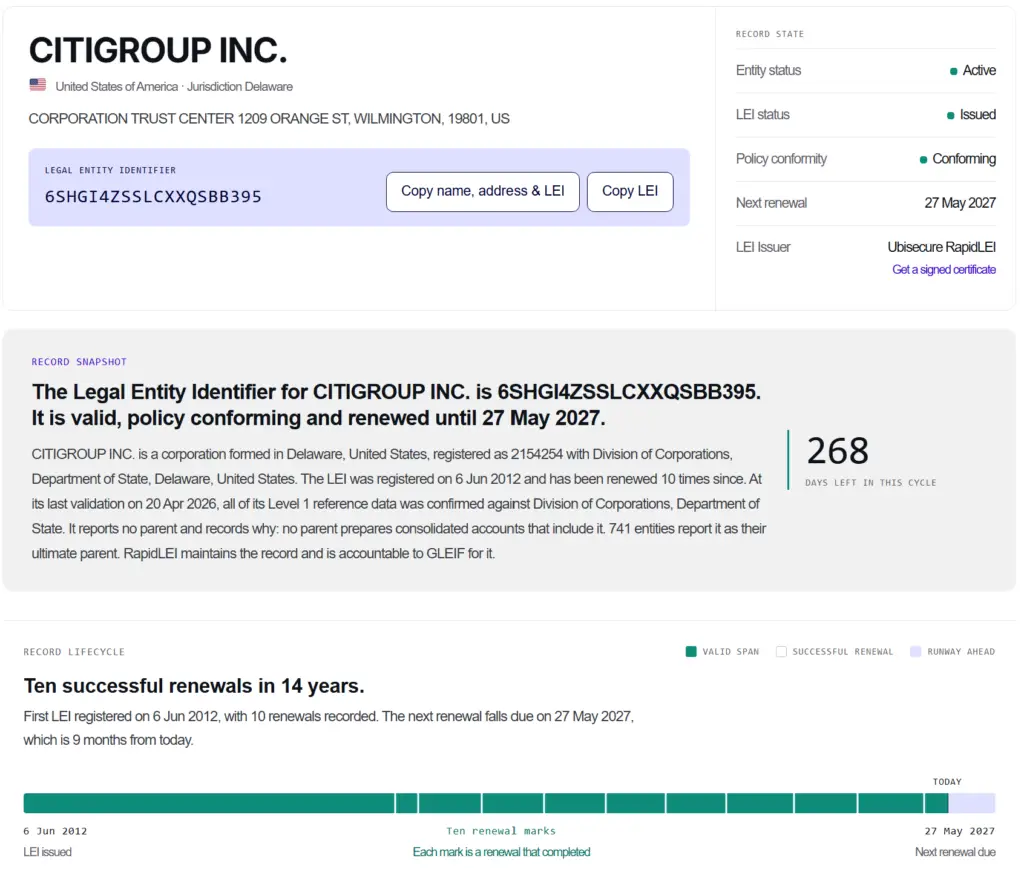
The snapshot is composed from the record as GLEIF last published it, and states that date, so the age of the data is always visible.
The Identifier results list
The same interpretation runs through the search results. Each entity carries a plain line beneath its name, for example “Valid and conforming · RapidLEI”, covering registration status, the Policy Conformity Flag and the managing LEI Issuer. The next renewal date appears with the days remaining, and turns amber inside thirty days. Where a record needs an action, renewal, reactivation or transfer, the action appears beside it.
One search box now handles every identifier type. Type a company name, a 20-character LEI or an ISIN and the tool recognises what you have entered, with an automatic BIC fallback for payment identifiers.
Applying the GLEIF rules
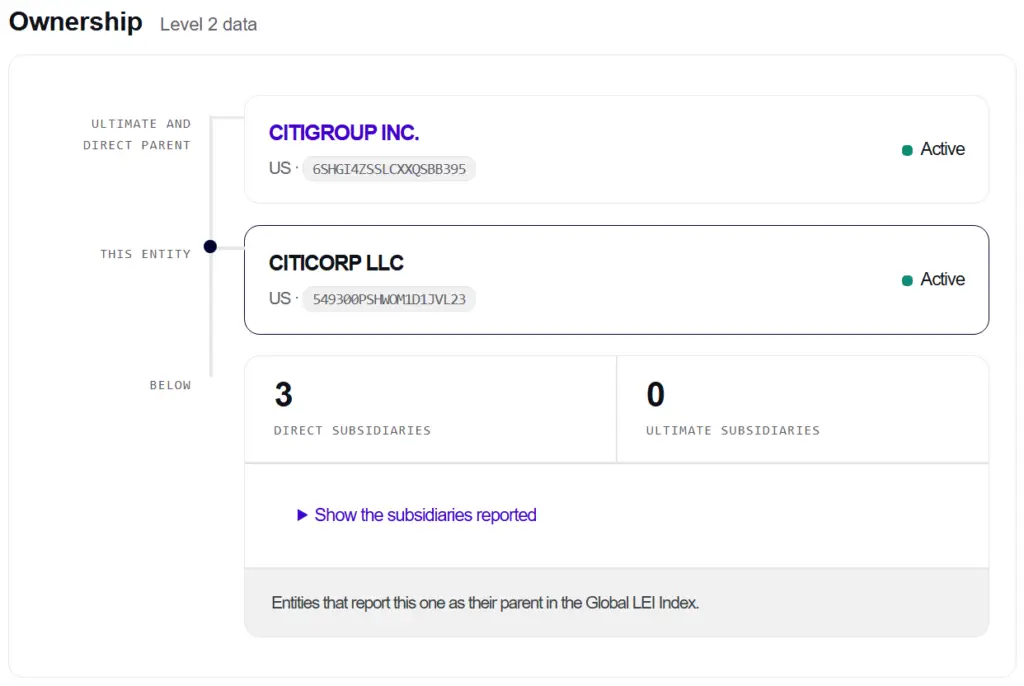
Ownership. A KYB analyst at a payments firm onboards two UK private companies. The first record names no parent and records that the entity is owned by natural persons: there is nothing further to map. The second also names no parent, recording that the relationship is not publicly disclosed: a parent exists, and the analyst knows to ask the applicant about it. GLEIF’s reporting exception rules distinguish these situations precisely, and a lookup that prints the raw code leaves the analyst to know which is which. The snapshot states it on every record.
Status. A fund administrator preparing a regulatory report checks a counterparty SPV. The registration lapsed eleven months ago, the entity itself is still active, and the reference data was last validated against the Luxembourg register before the lapse. 1.16 million of the index’s 3.29 million records were lapsed as of April 2026 (GLEIF statistics). The snapshot states how long the record has been lapsed and what was verified before maintenance stopped, which is what the administrator needs to decide the next step.
Free LEI checker service
LEI Search remains free, with no account or registration required, covering every record in the Global LEI Index across 200+ jurisdictions. If a search turns up a lapsed LEI of your own, it can be reactivated at any time.
Try the new LEI lookup on an entity you think you know, or talk to us about interpreted LEI data at volume.
References
GLEIF, LEI Statistics (Global LEI System Statistics Dashboard), April 2026 data.
GLEIF, Level 2 Data: Reporting Exceptions Format 2.1, documentation dated 20 July 2021.
GLEIF, GLEIF Data Quality Management.